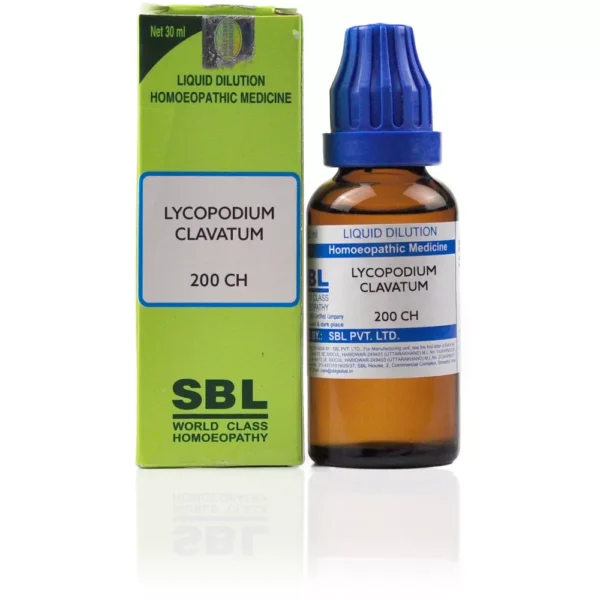


SBL Lycopodium Dilution 200 CH
Also Known As: Lyco, Lycop
Common Name: Club Moss / Wolf’s-claw
Overview
SBL Lycopodium Dilution 200 CH is a homeopathic preparation traditionally used in homeopathic practice based on individual symptom similarity. Lycopodium is commonly associated with digestive discomfort, abdominal bloating, liver-related functional disturbances, urinary concerns, and various constitutional symptoms.
In homeopathy, symptom patterns linked with Lycopodium are often described as predominantly affecting the right side of the body and may progress from right to left. Individuals associated with this remedy are often considered sensitive to cold and generally prefer warmth.
Traditional Homeopathic Profile
Homeopathic literature describes Lycopodium as being considered for individuals who may experience symptoms following emotional stress, anxiety, frustration, overexertion, or mental strain. It is also traditionally associated with digestive weakness, abdominal fullness, and functional discomfort affecting the digestive and urinary systems.
Areas Traditionally Associated with Lycopodium
Emotional and Mental Characteristics
According to traditional homeopathic descriptions, individuals associated with Lycopodium may exhibit:
- Lack of self-confidence despite outward determination
- Reluctance to take responsibility or make decisions
- Irritability and sensitivity to criticism
- Preference for control and leadership roles
- Anxiety related to being alone or facing new situations
- Difficulty handling stress or pressure
Nose, Ear and Throat
Traditional homeopathic references associate Lycopodium with symptoms such as:
- Nasal congestion and mouth breathing
- Ear discomfort and sensitivity
- Ringing or humming sensations in the ears
- Dryness or irritation of the throat
- Unpleasant mouth odor
- Tongue discomfort or sensitivity
Digestive and Abdominal Symptoms
Lycopodium is frequently mentioned in homeopathic literature for:
- Abdominal bloating and excessive gas
- Sensation of fullness after eating small quantities of food
- Digestive discomfort after certain foods or beverages
- Reduced digestive efficiency
- Cravings for sweet foods
- Abdominal discomfort associated with trapped gas
Urinary and Rectal Concerns
Traditional homeopathic texts describe Lycopodium in relation to:
- Frequent urge to urinate
- Urinary discomfort
- Sensation of incomplete bowel evacuation
- Hard stools and abdominal fullness
- Anal itching or discomfort
- Discomfort associated with hemorrhoids
Male and Female Health
Homeopathic practitioners may consider Lycopodium based on individual symptom patterns that include:
For Men
- Reduced vitality
- Functional urinary or prostate-related discomfort
For Women
- Vaginal dryness
- Menstrual irregularities
- Breast sensitivity or discomfort
Musculoskeletal Symptoms
Traditional indications include:
- Joint stiffness and discomfort
- Muscle cramps, particularly in the legs
- Finger and hand stiffness
- Sensitivity of corns and warts
- Weakness and numbness in the limbs
General Characteristics
Homeopathic literature often describes Lycopodium symptoms as:
- More noticeable during the late afternoon and early evening
- Associated with sensitivity to temperature changes
- Accompanied by a tendency toward digestive discomfort and bloating
- Linked with recurring sensitivity to cold weather
Safety Information
Use homeopathic products only according to the product label or the advice of a qualified healthcare professional. If symptoms persist, worsen, or are accompanied by serious health concerns, seek medical attention promptly.
Disclaimer
This product information is provided for educational purposes only. Homeopathic remedies are selected based on an individual’s unique symptom profile and are not intended to diagnose, treat, cure, or prevent any disease. Results may vary from person to person. Always consult a qualified healthcare professional before starting any new health product.


Reviews
There are no reviews yet.